Ever wondered about the difference between tofu and paneer?
Both are white, soft, and rich in protein, but they come from completely different sources.
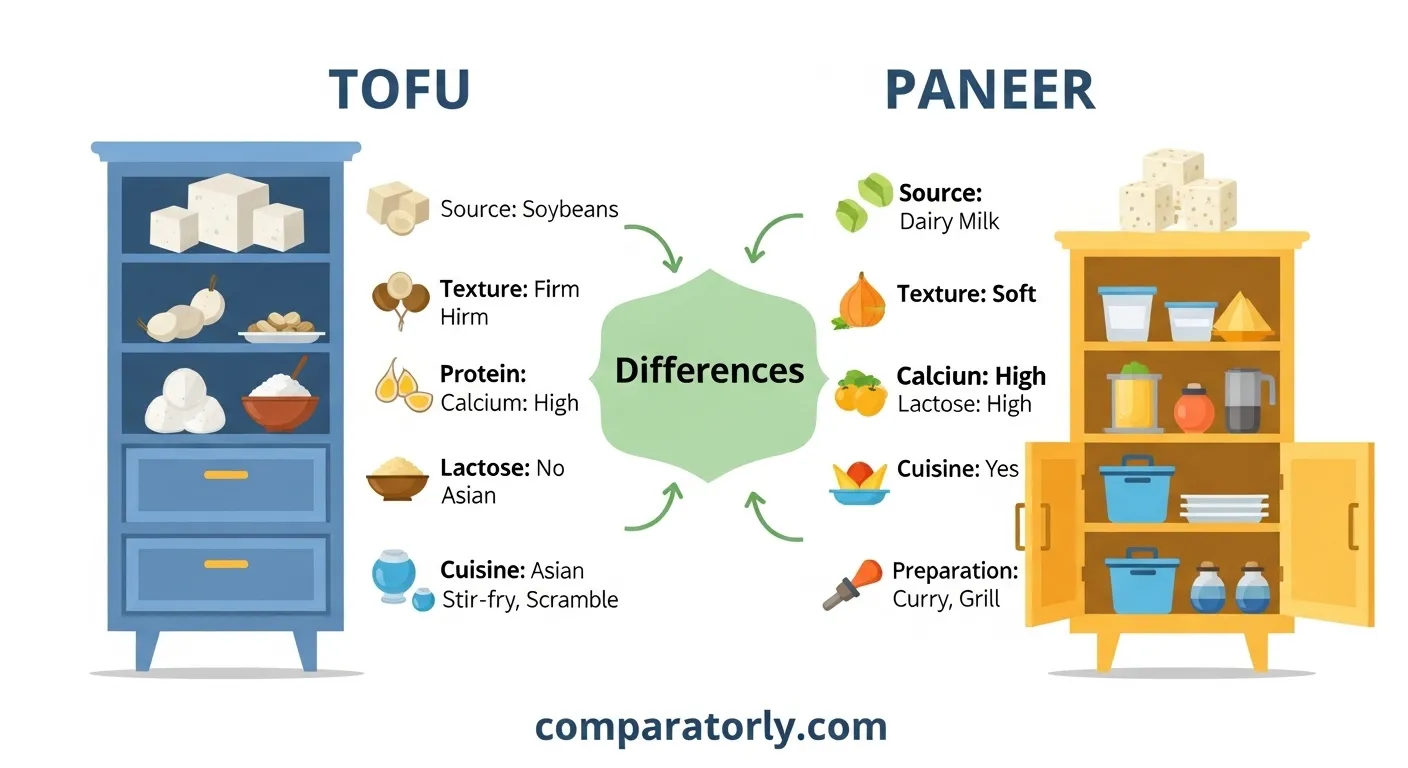
Tofu is made from soybeans, while paneer is a fresh cheese made from cow or buffalo milk.
Many people, especially those following vegetarian or vegan diets, often confuse the two.
Understanding their differences helps in making healthier food choices, enjoying the right taste, and using them correctly in recipes.
Imagine a young chef making a creamy curry for a vegan friend. She reached for paneer, only to realize it’s dairy-based.
That moment highlighted why knowing the difference matters.
From cooking to nutrition, tofu and paneer have unique flavors, textures, and dietary benefits.
Whether you are a home cook, a nutritionist, or a culinary expert, knowing the difference ensures accurate use in recipes, better health decisions, and a deeper appreciation for these versatile ingredients.
Difference Between Tofu and Paneer
Here are 10 key differences between tofu and paneer, explained with examples and simple language:
1. Source
- Tofu: Made from soybeans. Example: Soy milk is curdled to make tofu. Example: Tofu is common in vegan dishes.
- Paneer: Made from cow or buffalo milk. Example: Milk is curdled using lemon juice or vinegar. Example: Paneer is widely used in Indian curries.
2. Texture
- Tofu: Soft and spongy; can be silken or firm. Example: Silken tofu for desserts. Example: Firm tofu for stir-fries.
- Paneer: Firm and crumbly; retains shape when cooked. Example: Cubes in palak paneer. Example: Grilled paneer tikka.
3. Taste
- Tofu: Mild, slightly nutty; absorbs flavors easily. Example: Tofu in spicy stir-fry. Example: Tofu in soups.
- Paneer: Mild, creamy, slightly sweet. Example: Paneer butter masala. Example: Paneer in sweets like rasgulla.
4. Nutritional Value
- Tofu: High in protein, low in fat, contains isoflavones. Example: Helps in reducing cholesterol. Example: Tofu shakes for fitness.
- Paneer: High in protein and fat, rich in calcium. Example: Good for bone health. Example: Paneer snacks for children.
5. Cooking Methods
- Tofu: Can be steamed, fried, or baked. Example: Tofu stir-fry. Example: Tofu smoothies.
- Paneer: Usually grilled, fried, or cooked in curries. Example: Paneer tikka. Example: Paneer curry.
6. Shelf Life
- Tofu: Needs refrigeration, lasts 1–2 weeks. Example: Packaged tofu. Example: Homemade tofu.
- Paneer: Short shelf life; best fresh, lasts 3–5 days. Example: Homemade paneer. Example: Market paneer.
7. Dietary Preferences
- Tofu: Vegan-friendly. Example: Tofu burger. Example: Tofu salad.
- Paneer: Vegetarian (contains dairy). Example: Paneer sandwich. Example: Paneer paratha.
8. Cultural Origin
- Tofu: Originated in China. Example: Tofu in Chinese cuisine. Example: Japanese miso soup with tofu.
- Paneer: Originated in India. Example: Indian curries. Example: Paneer in traditional festivals.
9. Cost
- Tofu: Relatively cheap in Asian countries. Example: Tofu block in supermarkets. Example: Homemade tofu.
- Paneer: Slightly expensive, especially branded or buffalo paneer. Example: Store-bought paneer. Example: Restaurant paneer dishes.
10. Usage in Recipes
- Tofu: Versatile, used in desserts and savory dishes. Example: Chocolate tofu mousse. Example: Tofu stir-fry.
- Paneer: Mostly savory dishes, few desserts. Example: Paneer curry. Example: Paneer pakora.
Nature and Behavior
Tofu: Absorbs flavors, soft, non-greasy, easily adaptable.
Paneer: Retains shape, creamy, slightly sweet, suitable for frying and grilling.
Why People Are Confused About Their Use?
Both tofu and paneer look similar, are white, and rich in protein. Many beginners mistake one for the other, especially when cooking curries or salads. The key difference is that tofu is plant-based while paneer is dairy-based, affecting taste, cooking, and dietary suitability.
Table: Difference and Similarity
| Feature | Tofu | Paneer | Similarity |
| Source | Soybeans | Cow/Buffalo milk | High protein |
| Texture | Soft, spongy | Firm, crumbly | White color |
| Taste | Mild, absorbs flavors | Mild, slightly sweet | Mild flavor |
| Cooking | Fried, baked, steamed | Grilled, fried, curries | Can be cubed or sliced |
| Shelf Life | 1–2 weeks | 3–5 days | Needs refrigeration |
| Dietary Preference | Vegan | Vegetarian | Protein-rich |
| Origin | China | India | Popular in Asia |
| Cost | Affordable | Slightly expensive | Used in both savory dishes |
| Flavor Absorption | High | Moderate | Used in curries |
| Usage | Sweet & savory | Mostly savory | Nutritional benefits |
Which Is Better in What Situation?
Tofu: Best for vegans, low-fat diets, and Asian-style recipes. Its ability to absorb flavors makes it ideal for stir-fries, soups, and smoothies.
Paneer: Best for traditional Indian dishes, high-calorie meals, and protein-rich snacks. Ideal for curries, grilled appetizers, and festive dishes.
Metaphors and Similes
- Tofu: Soft as tofu – symbolizing gentleness.
- Paneer: Firm as paneer – symbolizing strength and reliability.
Connotation:
- Tofu: Positive/Neutral – health-conscious, adaptable.
- Paneer: Positive – rich, creamy, comforting.
Idioms or Proverbs
- Soft as tofu – used in describing gentle behavior.
- Firm as paneer – describing someone dependable.
Works in Literature
- Tofu Tales, Author: Mei Lin, 2015 (Fiction, China)
- Paneer Stories, Author: Anjali Sharma, 2018 (Cultural Fiction, India)
Movies on Keywords
- Tofu Dreams – 2020, China
- Paneer Tikka Love – 2019, India
FAQs
- Is tofu healthier than paneer?
- Tofu is low in fat; paneer is higher in protein and fat.
- Can tofu replace paneer in recipes?
- Yes, but the taste and texture may differ.
- Which lasts longer, tofu or paneer?
- Tofu lasts 1–2 weeks; paneer 3–5 days.
- Are both suitable for vegetarians?
- Paneer is vegetarian; tofu is vegan.
- Do both taste similar?
- No, tofu absorbs flavors; paneer has a mild creamy taste.
How Both Are Useful for Surroundings
- Tofu: Plant-based, sustainable, eco-friendly.
- Paneer: Uses milk, supports dairy farming.
Final Words for Both
Tofu and paneer each have unique roles in diets, cultures, and cuisines. Choosing between them depends on health goals, recipes, and dietary preferences.
Conclusion
The difference between tofu and paneer is more than just taste or texture.
It’s about origin, nutrition, and usage. Tofu is plant-based, versatile, and suitable for vegans, while paneer is dairy-rich, creamy, and ideal for Indian cuisine.
Knowing these differences helps chefs, nutritionists, and home cooks make informed decisions.
Both are protein-rich, adaptable, and essential in their respective culinary traditions.
Whether you are cooking a stir-fry, a curry, or a dessert, understanding the difference between tofu and paneer ensures better taste, nutrition, and culinary success.

I am Daniel Brooks, a vocabulary coach at Comparatorly.com. I specialize in synonyms, word meanings, and correct usage. I enjoy helping bloggers and content writers choose better words. My writing style is simple, practical, and easy to understand. I believe strong vocabulary creates powerful communication.