Sharara and Gharara are traditional South Asian outfits often worn at weddings and festive occasions.
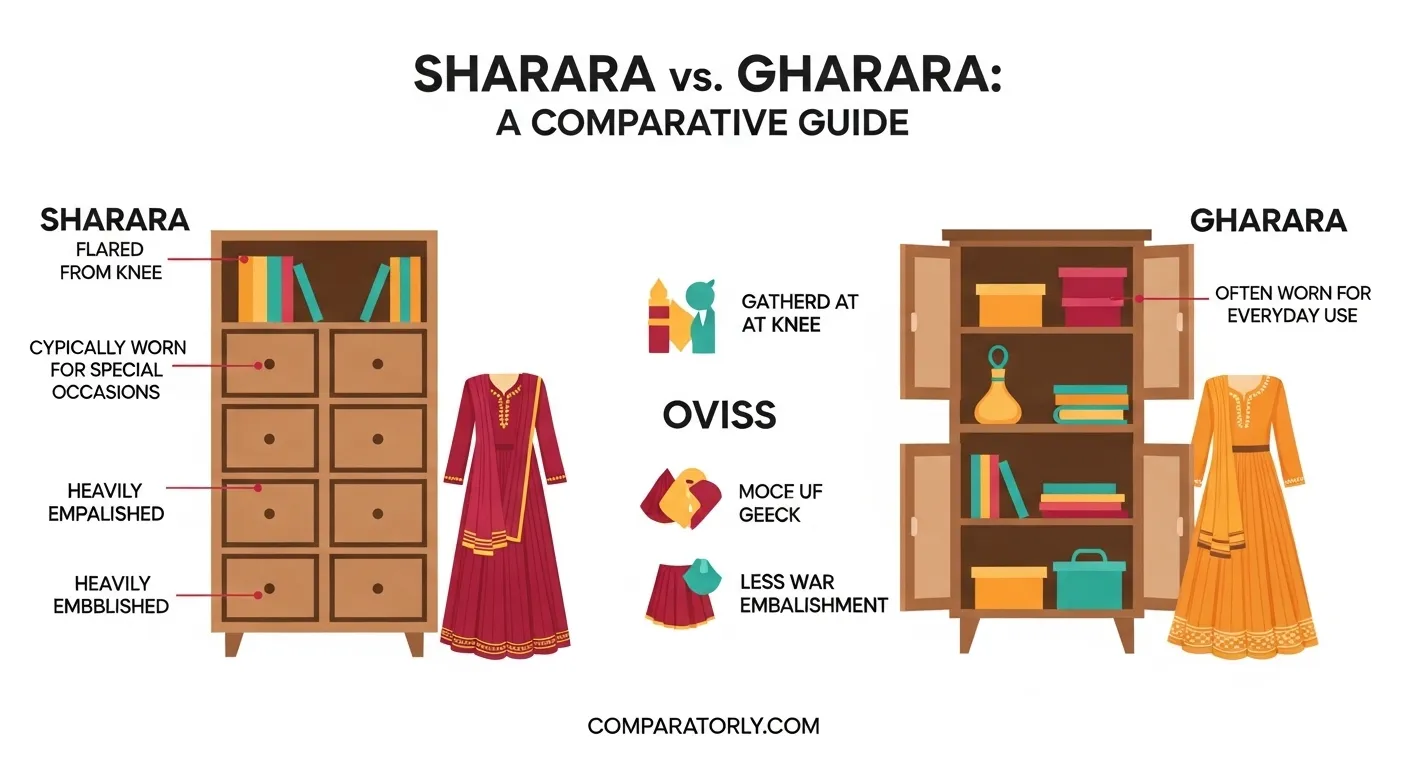
While both feature wide-legged bottoms, a Sharara has flowing, flared pants usually paired with a long kurta, giving a graceful, lightweight appearance.
A Gharara, on the other hand, has pants fitted till the knee and heavily flared from the knee downward, often with intricate embroidery, creating a more structured and dramatic look.
Understanding the difference helps fashion enthusiasts, brides, and designers choose the right outfit for style, comfort, and cultural authenticity.
Difference Between Sharara and Gharara
Here are 10 key points that differentiate sharara and gharara, with examples to make understanding simple:
- Origin
- Sharara: Originated in Lucknow during the Mughal era, popularized by royal courts.
Example: A bride wears a red sharara to her Mehndi ceremony, reflecting Mughal elegance.
Example: Celebrities like Kareena Kapoor have popularized shararas at Indian weddings. - Gharara: Also from Lucknow, specifically associated with Nawabi women of the 19th century.
Example: A gharara with intricate zari work is worn at traditional Pakistani weddings.
Example: Historical paintings often show women in ghararas during royal gatherings.
- Sharara: Originated in Lucknow during the Mughal era, popularized by royal courts.
- Structure
- Sharara: Flared from the waist, like a skirt, and worn with a short kurti or kameez.
Example: A gold-embroidered sharara flows as the bride walks down the aisle.
Example: Casual cotton shararas are worn at daytime festivals for comfort. - Gharara: Fitted till the knee, then flares dramatically from there, creating a trumpet shape.
Example: A gharara in maroon silk adds grandeur to wedding photography.
Example: Traditional ghararas often include pleats and folds for elegance.
- Sharara: Flared from the waist, like a skirt, and worn with a short kurti or kameez.
- Length of Top (Kurti/Kameez)
- Sharara: Paired with shorter tops, sometimes just below the waist.
Example: Designer shararas come with embellished crop-length tops.
Example: A simple cotton sharara can pair with a plain waist-length kurti. - Gharara: Usually paired with longer tops that reach mid-thigh or knees.
Example: A formal gharara ensemble includes a knee-length kurti with embroidery.
Example: Celebrities at award shows often wear long kurtis with ghararas.
- Sharara: Paired with shorter tops, sometimes just below the waist.
- Flare Style
- Sharara: Flare begins from the waist, giving a skirt-like appearance.
Example: Partywear sharara flares freely for a twirling effect.
Example: Cotton shararas allow easy movement during festive dances. - Gharara: Flare starts from the knee, creating a dramatic, bell-like look.
Example: Wedding ghararas have heavy flare to enhance royal aesthetics.
Example: Flowing ghararas are often paired with heavy dupattas for photo shoots.
- Sharara: Flare begins from the waist, giving a skirt-like appearance.
Nature and Behaviour
Sharara: Light, flowy, and versatile. Suited for festive and casual events. Easy to handle and comfortable for dancing.
Gharara: Regal, structured, and formal. Best for grand events and ceremonies. Requires careful handling due to heavier fabric and intricate work.
Why People Are Confused
The confusion arises because both are wide-legged outfits worn with traditional tops. Without understanding the flare origin (waist vs. knee), one may easily misidentify them. Fashion media often blur the distinction, further adding to the confusion.
Sharara vs Gharara: Comparison Table
| Feature | Sharara | Gharara | Similarity |
| Origin | Mughal Lucknow | Nawabi Lucknow | Both traditional South Asian attire |
| Flare | From waist | From knee | Both have flared bottoms |
| Top Length | Short kurti | Knee-length kurti | Paired with kurti or kameez |
| Material | Light fabrics | Heavy fabrics | Both use silk or chiffon sometimes |
| Occasion | Casual, Mehndi, festivals | Weddings, formal events | Both worn at celebrations |
| Movement | Comfortable | Slightly restrictive | Both allow graceful walking |
| Dupatta Styling | Casual | Formal | Both use dupattas |
| Cultural Tie | Pan-Indian, Pakistan | Nawabi, Pakistan | Both signify tradition |
| Price | Affordable | Expensive | Both available in designer versions |
| Popularity | Bollywood, festivals | Heritage weddings | Both highly stylish |
Which is Better in What Situation?
Sharara: Perfect for Mehndi, casual weddings, and festive dancing. Its comfort and flow make it suitable for long celebrations.
Gharara: Ideal for wedding receptions and formal events. The dramatic flare and intricate embroidery create a royal impression, perfect for photography and grand entrances.
Metaphors, Similes, and Connotation
- Sharara: Often symbolizes lightness and joy. She danced like a sharara in full swing, free and cheerful. Positive connotation.
- Gharara: Represents elegance and grandeur. Her presence was as commanding as a gharara at a royal court. Positive connotation.
Idioms/Proverbs Related
- Flow like a sharara – to move gracefully.
- Command like a gharara – to impress with presence or style.
Literature Featuring Sharara and Gharara
- The Last Nawab (Historical Novel, 1989, William Dalrymple) – Mentions ghararas in Lucknow court.
- Bollywood Wedding Chronicles (Drama, 2015, Anupama Chopra) – Features shararas in Mehndi scenes.
Movies Featuring Sharara and Gharara
- Umrao Jaan (1981, India) – Prominent gharara outfits.
- Kabhi Khushi Kabhie Gham (2001, India) – Showcases sharara during dance sequences.
FAQs
- Can a sharara be worn casually?
- Yes, lightweight shararas are perfect for casual festivals.
- Are ghararas expensive?
- Typically yes, due to embroidery and heavy fabrics.
- Do shararas flare like skirts?
- Yes, the flare starts from the waist, unlike ghararas.
- Which is older, sharara or gharara?
- Both originated in Lucknow; gharara is slightly older in Nawabi circles.
- Can modern fashion adapt ghararas?
- Yes, designers modernize them for weddings and global fashion shows.
Usefulness for Surroundings
Both outfits encourage the use of traditional textiles, hand embroidery, and sustainable craftsmanship, supporting local artisans and cultural heritage preservation.
Final Words
Understanding the difference between sharara and gharara enriches appreciation for South Asian fashion. Both garments carry stories of culture, royalty, and celebration, and choosing the right one elevates any occasion.
Conclusion
Sharara and gharara are more than just clothing; they are cultural expressions.
Shararas bring ease and festive joy, while ghararas reflect royal elegance and tradition.
Learning the subtle differences helps fashion enthusiasts, historians, and brides make informed choices.
Whether attending a wedding, festival, or cultural event, knowing the distinction ensures you honor tradition while looking stylish.
By embracing these garments, one also supports craftsmanship, celebrates heritage, and keeps centuries-old traditions alive in modern society.

I am Sarah Whitmore, an English grammar specialist at Comparatorly.com. I love breaking complex grammar rules into simple and clear explanations. My focus is on confusing word pairs like “affect vs effect” and “cancelation vs cancellation.” I believe grammar should feel easy, not stressful. My goal is to help students and writers build strong, confident English skills.