Imagine walking into a vibrant garden. Beneath the beauty lie mulch and compost, two essential materials often confused by gardeners.
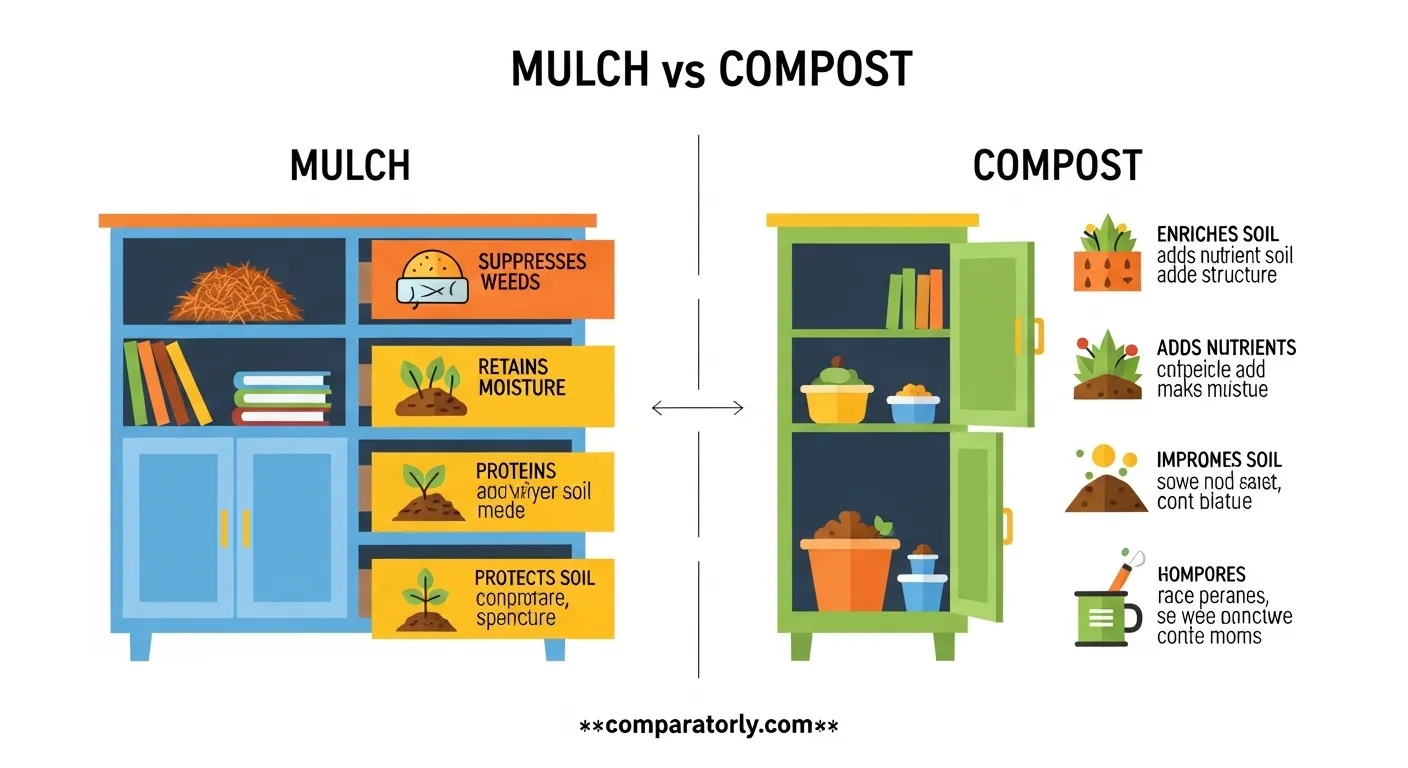
Mulch is a protective layer covering the soil, conserving moisture, preventing weeds, and shielding plants from harsh weather.
Compost is nutrient-rich material that feeds the soil, improves structure, and promotes microbial activity.
Understanding the difference allows gardeners beginners and experts alike to use both strategically for healthier, more productive gardens.
In the US, they are pronounced /mʌltʃ/ for mulch and /ˈkɑːmpɒst/ for compost; in the UK, /mʌltʃ/ and /ˈkɒmpɒst/.
Though simple in sound, their functions are profoundly different, and knowing these distinctions ensures proper application for maximum benefit.
Linking Hook
Now that we know what mulch and compost mean in everyday gardening, let’s dive into the detailed differences between the two, their nature, behavior, and why people often confuse them.
Difference Between Mulch and Compost
Here are 10 key differences between mulch and compost, explained with simple examples:
- Purpose
- Mulch protects soil from erosion, heat, and weeds.
- Example 1: Spreading bark mulch around rose bushes prevents weed growth.
- Example 2: Straw mulch in vegetable beds keeps soil moist during summer.
- Compost enriches soil with nutrients.
- Example 1: Adding compost to tomato plants improves fruit yield.
- Example 2: Compost mixed into flower beds strengthens soil structure.
- Mulch protects soil from erosion, heat, and weeds.
- Material Source
- Mulch is made from leaves, bark, straw, or wood chips.
- Example 1: Pine bark mulch for garden pathways.
- Example 2: Cocoa hull mulch for decorative purposes.
- Compost is decomposed organic matter like kitchen scraps or garden waste.
- Example 1: Vegetable peelings turned into compost.
- Example 2: Fallen leaves and grass clippings composted for garden beds.
- Mulch is made from leaves, bark, straw, or wood chips.
- Nutrient Content
- Mulch contains minimal nutrients; mainly protective.
- Example: Wood chip mulch doesn’t feed plants directly.
- Compost is nutrient-dense and acts as natural fertilizer.
- Example: Compost increases nitrogen and phosphorus levels in soil.
- Mulch contains minimal nutrients; mainly protective.
- Decomposition Time
- Mulch decomposes slowly, often taking months or years.
- Example: Hardwood mulch lasts 2–3 years before breaking down.
- Compost decomposes faster, ready to use in weeks to months.
- Example: Kitchen scraps turn into compost in 6–8 weeks.
- Mulch decomposes slowly, often taking months or years.
- Appearance and Texture
- Mulch is coarse and retains its form.
- Example: Bark chips visibly cover soil.
- Compost is crumbly and soil-like.
- Example: Dark, rich compost easily mixes with garden soil.
- Mulch is coarse and retains its form.
Nature and Behavior
Mulch
- Protective, insulating, and slow to break down.
- Maintains soil temperature and prevents weed growth.
Compost
- Nutrient-rich, active, and dynamic.
- Enhances soil structure, fertility, and microbial life.
Why People Are Confused
- Both mulch and compost are made from organic materials.
- Both are spread on soil surfaces, though their function differs.
- Beginners often use mulch as fertilizer, or compost as a protective cover, leading to confusion.
Comparison Table: Mulch vs Compost
| Feature | Mulch | Compost | Similarity |
| Purpose | Protects soil | Feeds soil | Both improve garden soil |
| Source | Leaves, bark, straw | Decomposed organic matter | Organic origin |
| Nutrient Content | Low | High | Biodegradable |
| Decomposition Rate | Slow | Fast | Breaks down naturally |
| Texture | Coarse | Crumbly | Natural material |
| Application | Topsoil cover | Mixed or top-dressed | Spread in garden beds |
| Water Retention | Conserves moisture | Improves soil structure | Supports plant growth |
| Microbial Activity | Minimal | High | Supports soil life |
| Seasonal Use | Seasonal protection | All-year nutrient supply | Enhances soil |
| Cost | Moderate to high | Low to free | Eco-friendly |
Which Is Better in What Situation?
- Mulch is better for protecting soil from temperature extremes, reducing weeds, and providing a neat garden appearance. It is perfect for tree bases, flower beds, and winter protection.
- Compost is better for enriching poor soil, improving fertility, and boosting plant growth. Ideal for vegetable gardens, planting beds, and soil rehabilitation projects.
Metaphors and Similes
- Mulch is often compared to a blanket for the earth.
- Compost is called plant food or soil vitamin.
- Simile examples:
- Mulch covers the soil like a cozy quilt.
- Compost nourishes plants like a hearty meal.
Connotation:
- Mulch → Neutral/Positive (protective and supportive)
- Compost → Positive (life-giving, enriching)
Idioms and Proverbs
- You reap what you sow → compost enriches soil for better harvests.
- Cover your bases → mulch protects soil and roots.
Works in Literature
- The Secret Garden (Novel, Frances Hodgson Burnett, 1911) – mentions soil care with mulch and compost.
- Walden (Essay, Henry David Thoreau, 1854) – discusses natural composting for garden health.
Movies on Gardening or Soil
- The Secret Garden (1993, UK/US) – mulching and composting scenes.
- A Little Chaos (2014, UK) – garden soil and composting references.
FAQs
- Can mulch be used as compost?
- No, mulch protects soil, while compost feeds it.
- Does compost prevent weeds like mulch?
- Not effectively; mulch is better for weed control.
- Can I make my own mulch and compost?
- Yes, mulch from leaves and compost from kitchen scraps.
- Which is better for vegetables?
- Compost enriches soil; mulch can protect roots.
- Do both improve soil health?
- Yes, mulch conserves moisture, and compost improves fertility.
Environmental Benefits
- Mulch reduces water evaporation and prevents soil erosion.
- Compost recycles organic waste, enhances soil fertility, and reduces chemical fertilizer use.
Final Words
Understanding the difference between mulch and compost is vital for any gardener, landscaper, or environmental enthusiast. Both play unique roles in sustainable gardening, improving soil health, plant growth, and eco-friendly practices.
Conclusion
Mulch and compost are two sides of the same gardening coin.
Mulch protects, insulates, and beautifies soil, while compost nourishes, enriches, and rejuvenates it.
Recognizing their differences empowers gardeners to optimize plant health, conserve water, and reduce waste.
By strategically combining mulch and compost, you create a resilient and thriving garden ecosystem.
Whether you are a beginner or an expert, knowing the difference between mulch and compost ensures your garden not only survives but flourishes sustainably.

I am Sarah Whitmore, an English grammar specialist at Comparatorly.com. I love breaking complex grammar rules into simple and clear explanations. My focus is on confusing word pairs like “affect vs effect” and “cancelation vs cancellation.” I believe grammar should feel easy, not stressful. My goal is to help students and writers build strong, confident English skills.