Imagine hiking through the snowy forests of North America.
You spot a massive animal with broad antlers grazing quietly, and nearby, a herd of smaller, more agile animals moving swiftly across the tundra.
If you’re not a wildlife expert, it’s easy to mix up a moose and caribou.
Many people wonder about the difference between moose and caribou, especially because they often inhabit overlapping regions in Canada, Alaska, and Scandinavia.
The term moose and caribou comes up frequently in wildlife studies, hunting guides, and ecological research.
Both species are large, hoofed mammals, but their behavior, habitat, and appearance are strikingly different.
Understanding the difference between moose and caribou is essential for biologists, wildlife photographers, and even casual nature enthusiasts.
Learning these distinctions not only clears confusion but also helps in appreciating these majestic animals in their natural habitat.
By the end of this guide, you’ll confidently tell a moose from a caribou and understand why this distinction matters.
Pronunciation
- Moose: /muːs/ (US & UK)
- Caribou: /ˈkærɪbuː/ (US & UK)
Let’s dive deeper into the differences between moose and caribou to understand their unique characteristics.
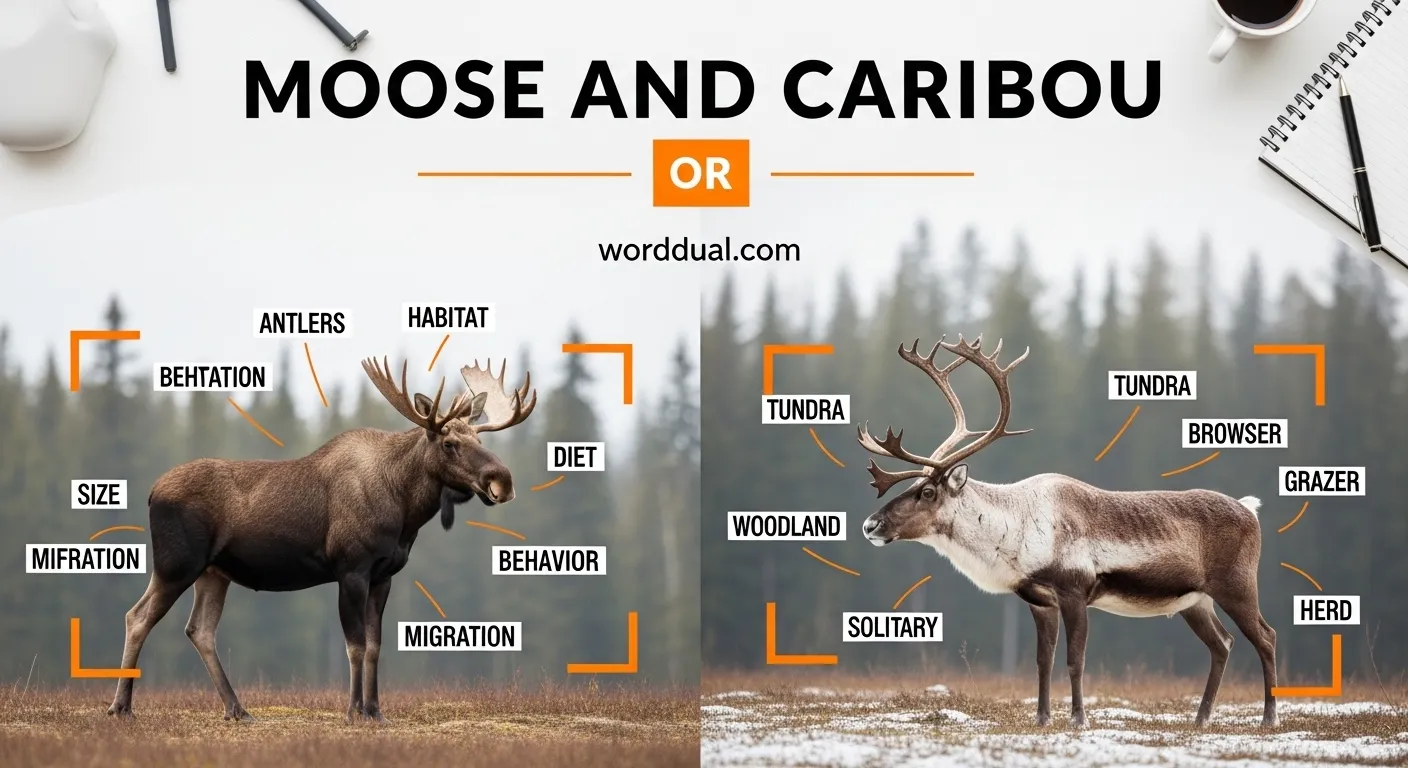
Difference Between Moose and Caribou
Here are 10 key points that highlight the differences between moose and caribou, along with examples for each:
1. Size and Build
- Moose: Largest member of the deer family. Heavy and tall.
Example 1: A moose can weigh up to 700 kg.
Example 2: Adult moose often stand over 6 feet tall at the shoulder. - Caribou: Smaller and lighter with a more slender frame.
Example 1: Caribou weigh around 160–300 kg.
Example 2: They stand 4–5 feet tall at the shoulder.
2. Antlers
- Moose: Broad, flat antlers. Only males have them.
Example 1: Male moose display antlers up to 6 feet wide.
Example 2: Antlers are shed every year in winter. - Caribou: Branched, twig-like antlers. Both sexes have antlers.
Example 1: Female caribou grow smaller antlers.
Example 2: Used for digging through snow in winter.
3. Habitat
- Moose: Prefer forests, lakesides, and wetlands.
Example 1: Found in Canadian forests.
Example 2: Often near rivers to feed on aquatic plants. - Caribou: Prefer tundra, open plains, and mountainous regions.
Example 1: Herds migrate across Arctic tundra.
Example 2: Found in northern Scandinavia and Alaska.
4. Diet
- Moose: Herbivores, eat leaves, twigs, and aquatic plants.
Example 1: Feeds on willow and birch leaves.
Example 2: Eats pondweed from lakes. - Caribou: Eat lichens, moss, grasses, and shrubs.
Example 1: Winters mostly depend on lichen.
Example 2: Grazes tundra grasses in summer.
5. Behavior
- Moose: Solitary, territorial, and less social.
Example 1: Adult males often roam alone.
Example 2: Aggressive during mating season. - Caribou: Highly social, live in herds, and migrate long distances.
Example 1: Herds can have thousands of caribou.
Example 2: Migrate up to 3,000 miles annually.
6. Speed and Movement
- Moose: Slower, more deliberate movements.
Example 1: Walks at 5 mph.
Example 2: Can sprint 35 mph for short distances. - Caribou: Fast and agile, adapted for long migrations.
Example 1: Can travel 50–60 miles per day during migration.
Example 2: Agile over snow and uneven terrain.
7. Lifespan
- Moose: 15–20 years in the wild.
Example 1: Survives harsh winters by staying near water.
Example 2: Life expectancy reduces in predator-heavy areas. - Caribou: 12–15 years in the wild.
Example 1: Migration increases energy demands.
Example 2: Predators impact lifespan significantly.
8. Predators
- Moose: Wolves, bears, and humans.
Example 1: Wolves hunt calves in packs.
Example 2: Bears target isolated adults in forests. - Caribou: Wolves, bears, and humans.
Example 1: Arctic wolves often follow migration routes.
Example 2: Bears hunt calves during calving season.
9. Vocalizations
- Moose: Low-pitched calls, grunts, and bellows.
Example 1: Males bellow to attract mates.
Example 2: Females make soft grunts to communicate. - Caribou: Softer grunts and snorts.
Example 1: Uses snorts to warn herd of danger.
Example 2: Calves bleat to find mothers.
10. Conservation Status
- Moose: Stable in most regions; some local declines.
Example 1: Populations affected by climate change.
Example 2: Hunting impacts moose in certain areas. - Caribou: Some subspecies endangered due to habitat loss.
Example 1: Woodland caribou declining in Canada.
Example 2: Arctic migration routes affected by roads and mining.
Nature and Behaviour
Moose
- Mostly solitary.
- Territorial, especially males.
- Peaceful but can charge when threatened.
- Active mostly at dawn and dusk.
Caribou
- Highly social, live in large herds.
- Migratory and travel long distances.
- Grazers, constantly moving in search of food.
- Alert and wary of predators.
Why People Are Confused
- Similar size and antlers can mislead beginners.
- Both are northern animals often shown together in media.
- Hunting guides sometimes refer to both in overlapping habitats.
- Typing or translation errors in English also create confusion.
Moose vs Caribou – Comparison Table
| Feature | Moose | Caribou | Similarity/Notes |
| Size | Large, heavy | Medium, lighter | Both are deer family members |
| Antlers | Broad, flat (males) | Branched, twig-like | Both shed annually |
| Habitat | Forests, wetlands | Tundra, plains | Northern hemisphere animals |
| Social Behaviour | Solitary | Herds, migratory | Both avoid human settlements |
| Diet | Leaves, twigs, aquatic plants | Lichens, moss, grasses | Herbivores |
| Predators | Wolves, bears | Wolves, bears | Both hunted by humans |
| Vocalization | Grunts, bellows | Grunts, snorts | Communication present |
| Lifespan | 15–20 years | 12–15 years | Moderate longevity |
| Speed | Slow, 35 mph sprint | Fast, migratory | Both can move quickly when threatened |
| Conservation Status | Stable, local declines | Some endangered | Populations monitored |
Which Is Better in What Situation?
- Moose: Ideal for observing in calm forested areas, suitable for wildlife photography and forest ecosystem studies.
- Caribou: Perfect for studying migration, herd behavior, and adaptation to harsh tundra climates. Both serve different ecological purposes.
Metaphors and Similes
- Moose: Symbol of strength and solitude. Strong as a moose.
- Caribou: Symbol of endurance and teamwork. Like a caribou herd, they moved together.
Connotative Meaning
- Moose → Neutral to positive (strength, calm)
- Caribou → Positive (resilience, teamwork)
Idioms or Proverbs
- As strong as a moose → used in literature to describe powerful people
- Move like caribou → used for traveling or coordinated group efforts
Works in Literature
- Moose – Novel, Robert B. Parker, 1998, Fiction
- Caribou Crossing – Novel, Anne Simpson, 2001, Nature Fiction
- The Great Moose Hunt – Short Story, 1955, Adventure
Movies
- Moose: Northern Adventure – 2010, Canada
- Caribou Tales – 2015, USA
- Northern Wildlife – 2018, Sweden
FAQs
- Are moose and caribou related?
Yes, both belong to the deer family. - Do they live in the same regions?
Sometimes, but moose prefer forests, caribou prefer tundra. - Can both swim?
Yes, moose are excellent swimmers; caribou can swim short distances. - Do both shed antlers?
Yes, moose males and both sexes of caribou shed annually. - Which is faster?
Caribou are faster due to migration and agility.
Usefulness to Surroundings
- Moose: Help control vegetation near wetlands, support predator-prey balance.
- Caribou: Maintain tundra ecology, assist in plant seed dispersal, support local predator populations.
Final Words
Understanding the difference between moose and caribou is essential for nature lovers, hunters, and ecologists. Each plays a unique role in ecosystems, from forests to tundras.
Conclusion
The difference between moose and caribou lies in size, habitat, behavior, and antlers.
Moose are solitary forest dwellers with massive antlers, while caribou are social tundra migrants with slender, branched antlers.
Learning these differences helps in wildlife education, conservation, and everyday nature observation.
By understanding their behavior, diet, and ecological roles, we can appreciate these northern giants more fully.
Whether for photography, research, or cultural knowledge, distinguishing moose from caribou enriches our connection to the natural world.

I am Daniel Brooks, a vocabulary coach at Comparatorly.com. I specialize in synonyms, word meanings, and correct usage. I enjoy helping bloggers and content writers choose better words. My writing style is simple, practical, and easy to understand. I believe strong vocabulary creates powerful communication.